BoomshankaTribal

Bellydancers

What is Boomshanka all about?

Entry photo example

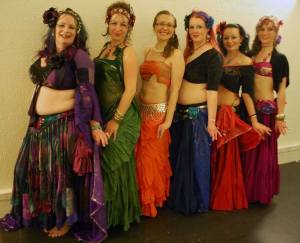
Ten women joined a series of tribal belly dance workshops run by Tory Harle in Sharrow, Sheffield in October 2003. Tory was so enthusiastic and shared with us some great music and her energetic moves. After only a few weeks we were putting together short choreography, getting excited about outfits and the music was getting under our skin. Most of all, friendships were being formed and we pleaded with Tory to continue teaching us.

Tory had been learning Tribal Gypsy belly dance from Nicky Franklin, ‘Zehara,’ in Manchester. Zehara’s performance troupe, The Urban Gypsies, are sometimes 16 strong. They are fun to watch and even more enjoyable to join in with at Zehara’s workshops. Tory’s love for the dance and her speedy ability to pick up moves and develop new sequences ensured that our emerging troupe continued to develop this wonderful style of dance.

After about a year of dancing, Tory got itchy feet and set off round the world to experience life and possible develop her dancing and teaching skills. Tory requested that the troupe continue to practice and run the classes so that she could rejoin the troupe on her return. As it happened, Tory never returned. Instead she moved to Manchester and continued to dance with the Urban Gypsies. We wish her love and luck.

So a group of about 8 of us started a committee to discuss the plan for the class and the troupe. There were some girls who had started with Tory’s workshops and some recent members of the class. A period of choreography development and group practice emerged with shared leader roles. Slowly, over time, more defined roles emerged, compromises were made, people came and went, the venue changed and Boomshanka was named.

Ruth, Melissa and Nicole began teaching a “beginners’ class”, Joy took on the “Improvers’ class”, and Liz provided stability with her money management, organisational skills, constant reliability, oh yeah and smiles too.

When Joy left to start a new life in Dundee (and formed Boomshanka 2), the Improvers’ group became a wonderful sharing space for the troupe to learn from each other, develop choreography and practice for gigs. Meanwhile the Beginners’ group went from strength to strength, led by Ruth and Melissa.

Times keep changing for Boomshanka – tribal by name, tribal by nature – with a move to another venue, and as it was time for Melissa to progress in her career and leave Sheffield, the leader roles changed again. Zoe had been so fast to learn and her moves fit so well with Boomshanka, she was the obvious choice for the next teacher, helped by Julia, whose return to Boomshanka after a year away was truly welcomed. Ruth then began to run Improvers’ group with Rachael helping. This enabled us to move up aspiring dancers into a more advanced group and make room for ever more new starters. Even now there is a waiting list (see link) of keen new dancers.

For troupe members’ personal take on Boomshanka, please see our individual profiles…enjoy!

And Spread The Boom!!

x

About Boomshanka’s Style Of Dance – A Bit Of History

With origins in ancient fertility cults and with assisting childbirth, Belly Dance had a long history. The middle East and North African tribes and communities maintained the dance when it was lost elsewhere.

In the Middle East, women danced for each other as a social past time. Professional dancers came from the poorer members of society, from the Gypsies or travelling communities and the minority groups.

The Napoleonic invasion of North Africa in 1798 offered professional dancers (mainly consisting of the Ouled Nail of Algeria and Ghawazee of Egypt) further sources of income entertaining the troupes. It was at this time that the term ‘dase duventre’ (dance of the stomach) was formed.

Belly dance made a move to the USA in 1893 with the Great Columbia Exposition in Chicago. This entertainment fair saw the dance evolve into a showcase of exotic titillating performances. From the success of the shows, many more festivals and carnivals sprang up and the exotic dancers of the East helped secure the notoriety of the unsavoury reputation of the Burlesque business.

Back in Algiers, Beirut and Cairo, Cabaret style was developed in the colonial clubs and bars. The costume of the dancers by the 1920s had evolved to meet the demands of the audience and the desire to emulate Hollywood, which had, at this time, lapped up this dance craze.

The last 50 years has seen Tribal style evolve, initiated by dancers such as Jamila Salimpour of the Bagdad Cabaret who was seen on Broadway from the 1960s; and Masha Archer whose San Francisco Classic Dance Troupe could be seen at cultural fairs during the 1970s and 1980s. The tribal jewellery and antique pieces were key features of Masha’s style, though her choice of music reflected her open American attitude.

American Tribal Style (ATS) was developed by Carolena Nericcio, with her group FatChanceBellyDance from 1987. The Tribal Style format came from Jamila – with the chorus, set up in a half moon, and individual dances coming out to do small 2-3 minute routines before returning to the chorus. The heavily jewelled costuming was utilised but the troupe became more uniform than Jamila’s. The posture of ATS dancers came from Masha and was upright with the chest lifted, it was graceful and with a sense of integrity.

Carlena brought the dance closer to its cultural roots by using mainly North African and Middle Eastern folkloric music and keeping the movements basic to belly dance.

In the UK, belly dance also gained in popularity, with teachers and performers across the country sharing skills and ideas of this historic dance form. ATS is found in the UK, though much less represented than in the States.

Zehara (Nicky Franklin) has been developing her own Tribal Gypsy Belly Dance style with her background in African dance and belly dance. Zehara encourages students of her classes and workshops to take ideas and incorporate them into their performance and choreography. She describes the Urban Gypsy style as “very natural and exuberant, powerful and extrovert – the new contemporary Belly Dance of the 21st Century”.

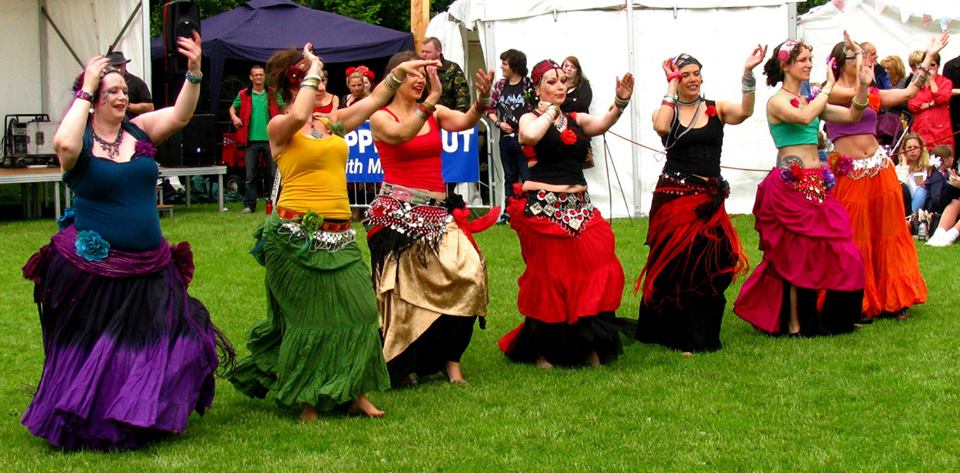
Boomshanka Tribal Belly Dancers have been enthused by learning Zehara’s unique style and have taken it into their hearts, allowing it to further evolve.

Move! If you've got a belly, dance!

image of belly dancer

There's been a lot of excited talk recently on the Beyond Chocolate forum about what brilliant fun belly dancing is. Amy is an especially enthusiastic devotee, so we asked her to tell us why she thinks we all ought to get shimmying!

"Apparently, Boomshanka, the name of my belly-dance troupe, means 'may the seed of your loins be fruitful in the belly of your woman'. It sort of sums it up, really - belly dance is reputed to have been devised as a method of toning up for childbirth. It's all about hips and curves and womanliness.

You don't need to be thin, athletic or fit to do belly dancing - in fact, it's better if you have something to wiggle about! You don't have to wear a skimpy see-through chiffon number with your tummy exposed for all the world to see, either - though, if you want to, you can. And don't worry - there will almost certainly be someone at your class with a bigger, wobblier tummy than yours!

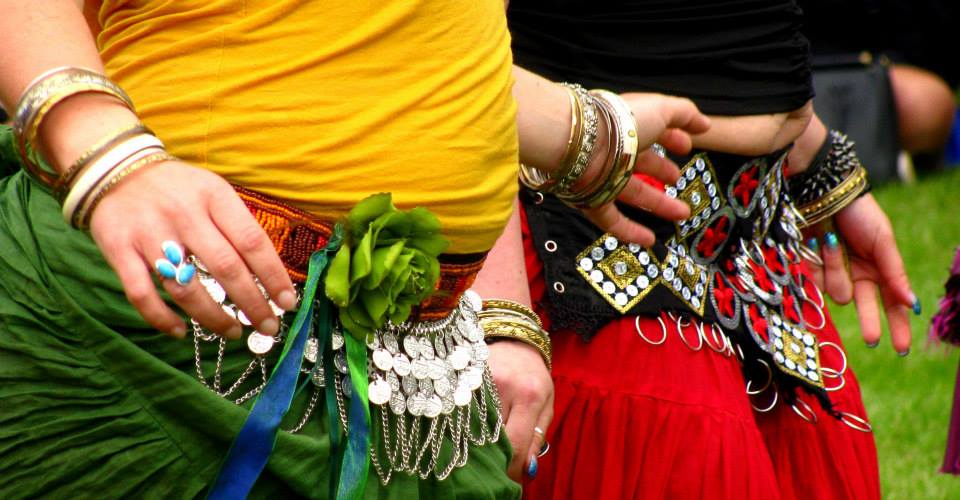
Costumes for belly dance vary from cabaret-style, jewelled gauzy numbers to much more substantial, gypsy styles (my own preference). If you've always wanted an excuse to get a bit sparkly, this is it! And don't get me started on the jingling. There's nothing quite as satisfying as the day that your shimmy suddenly kicks in and you're jingling that coinage like a dervish! Don't despair if you don't get it at first - shimmying is a matter of practising till, suddenly, you can just do it. It's a bit like swimming! And when else can you get away with wearing bells and coins about your person in public?

I've been belly dancing on and off for about seven years and I've yet to meet anyone at a class who wasn't lovely - it seems to attract such friendly women. There's no comparing how fat other people's arses are - everyone just wants to share the sheer joy of what they do! It's a cracking work-out and good for bad backs, and you can set your own pace. And we all seem to be good at something: if you can't shimmy, maybe you can head slide, or do arm movements, or swoosh a veil with the best of 'em.

Go on - give it a go! You probably won't be the biggest, or the shyest, or the least co-ordinated there, and you'll very probably love it!"